Most businesses treat blogging as a box to tick. Publish something, anything, often enough and hope Google notices. It rarely works, because Google rewards relevance, not effort.
Cliffside Windows, a Lincolnshire window and door installer, wanted content built on a strategy, targeting the searches their customers were genuinely making.
Where It Started: The Website
Before the blog, there was the website. Cliffside needed copy that did two jobs at once, read well for the homeowner and ranked well for Google. That’s my specialty. I combine SEO content that appeases our robot overlords with persuasive content that actually encourages human beings to take the next step. I rewrote their entire website and built it around the keywords that mattered most to their business.
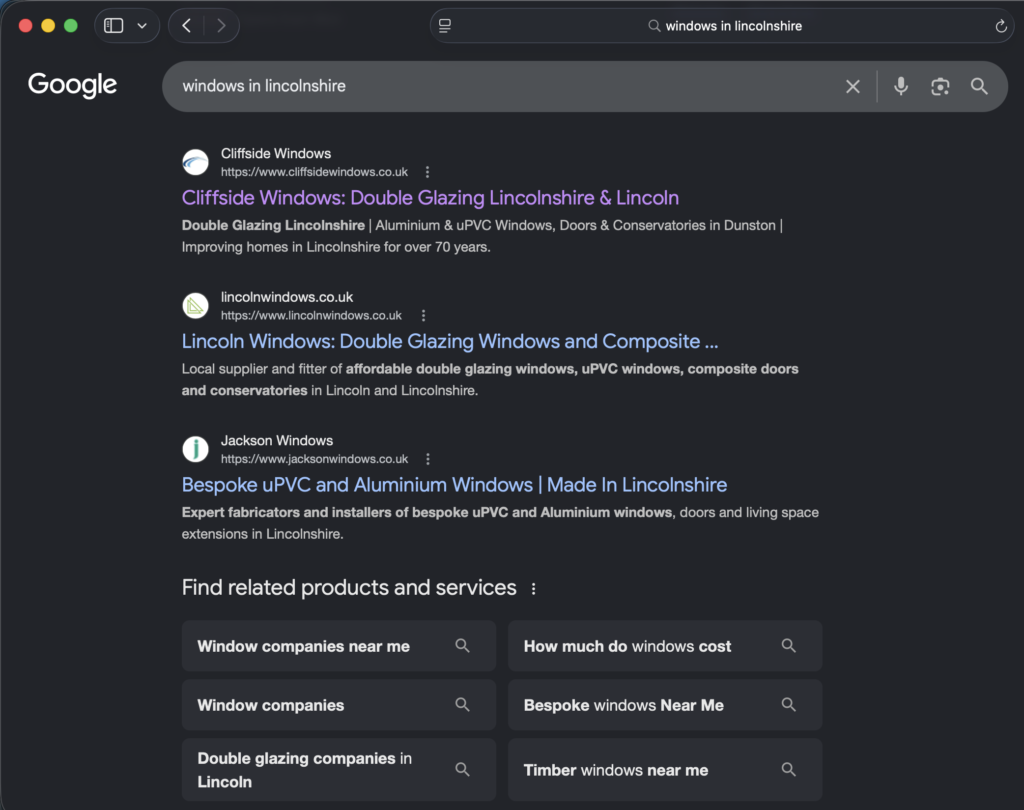
The result: Cliffside now ranks number one on Google for their primary keywords.
That’s the foundation everything else was built on. Strong service-page rankings give a site authority, but they only capture people who are already searching for what you sell. To reach the much larger group of people researching before they’re ready to buy, you need content that answers their questions. That’s where the blog came in.
The Blog Retainer: Strategy First, Writing Second
Impressed with the website copy, Cliffside brought me on for a blog retainer. I started with a deep dive.
I built a full SEO blog strategy: identifying the long-tail keywords their potential customers were actually searching, mapping those searches against where each person sat in the buying journey, and prioritising the topics that would do the most work. Only then did the writing begin.
The difference between this and ordinary blogging is the difference between aiming and hoping. Every post had a target keyword, a clear search intent behind it, and a job to do.
The Results
Every blog I wrote for Cliffside ranked within the top three on Google for its target long-tail keyword. Many were pulled into the AI-generated answers that sit at the very top of the page – the position that increasingly captures the click before a searcher ever scrolls to the traditional results.
The top three organic results take the overwhelming majority of clicks on any given search. Everything below the fold is, for most searches, invisible. Getting there consistently, post after post, is what turns a blog from background noise into a genuine source of new enquiries.
Content That Sells While It Ranks
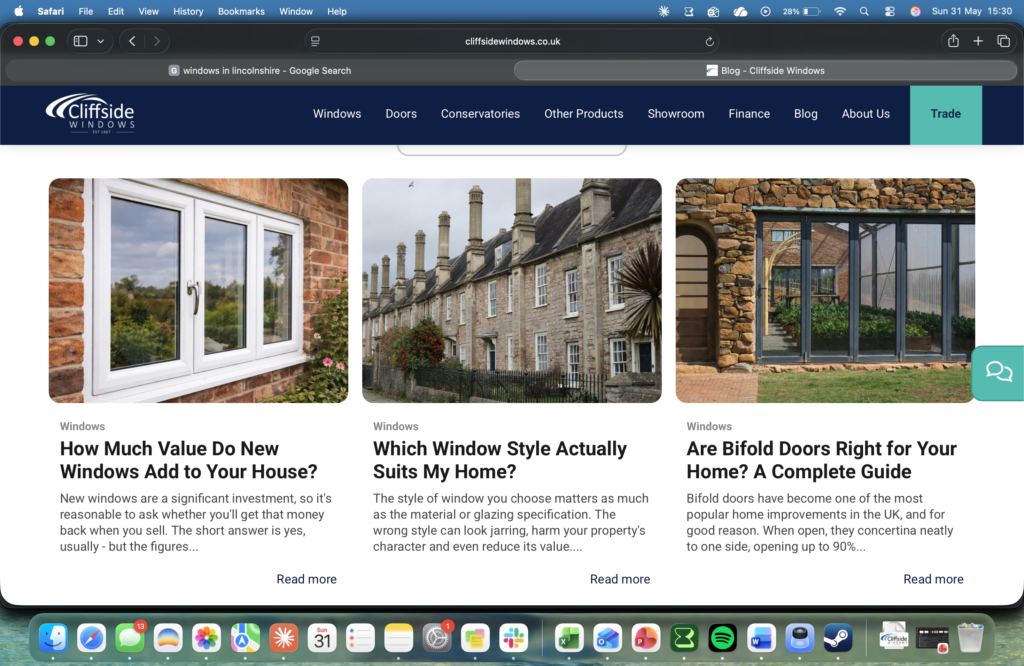
New traffic was only half the point. The blogs were also written to work as a nurture sequence, guiding existing and prospective customers through the buying process.
Buying windows or doors is a considered purchase and a large expense. People research for weeks. They want to know whether triple glazing is worth the money, what to look for in a reliable installer, which window styles suit a period property, how to look after what they’ve bought. Each blog answered a real question at a real stage of that journey, so the content did double duty: it brought new people in through search, and it reassured and educated the people already considering a quote.
Team members could also forward links to detailed guides to any customers asking them a question, rather than whip up a quick 2 or 3 line response.
The Call To Action
Cliffside Windows ranks number one for their primary keywords off the back of their website copy, and their blog content has consistently landed in Google’s top three for its target searches, with many posts featured in the AI answers above the standard results.
That combination, authority at the top of the funnel and advice throughout the buying journey, is what SEO content is supposed to deliver and rarely does. Strategy first, writing second.
Cliffside’s retainer comes to an end in June 2026 (so I can’t take any credit for any blog content shared after that date!). This means I have an opening in my diary for a new retainer client who wants to climb to the top of the search engine results page and get themselves more customers.
If you’d like content that ranks and sells for your business, get in touch.